Mon,
Mar 1
LODGE ROOM PRESENTS
Darlingside
DOORS 7PM | SHOW 8PM
ALL AGES
There’s no other band with a sound quite like Darlingside’s. Across the Massachusetts indie folk group’s nearly two decades together, their music has burst at the seams with layered, intricate vocal harmonies, surprising rhythms, thoughtful lyrics, and enduring melodies. Each band member juggles multiple instruments on stage, and their voices can alternately merge into one sound or pull apart and recombine like a murmuration of birds. They have released five acclaimed albums, toured internationally, and attracted the attention of the New Yorker, NPR, Rolling Stone, the Wall Street Journal, the Associated Press, Paste, the Huffington Post, American Songwriter, No Depression, and a devoted following of careful listeners along the way.
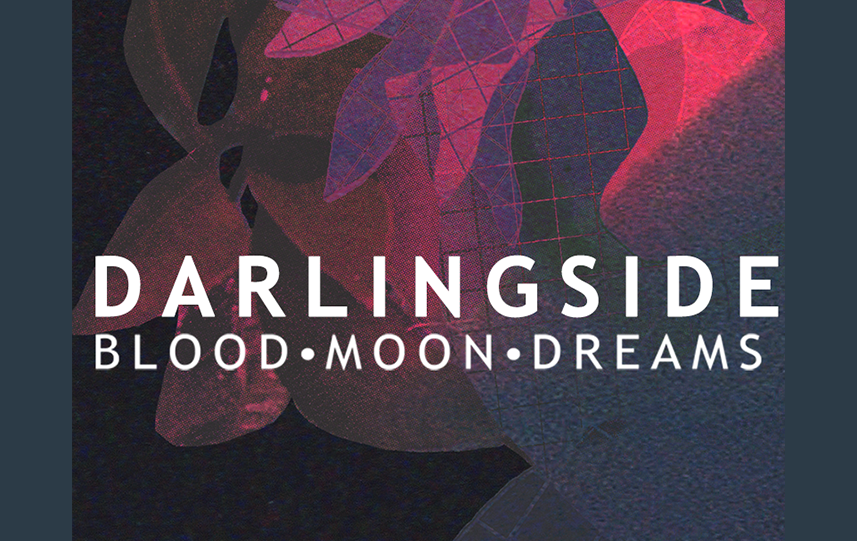
Their new album, Blood Moon Dreams, finds the trio — vocalists and multi-instrumentalists Don Mitchell, Auyon Mukharji, and Harris Paseltiner — addressing a turning point in their career by making a conscious shift away from the expansive textures, universal anthems, and abstract ideas that had characterized recent albums. Re-examining their priorities in the wake of an unstable period for the band, they decided to resist their tendency to embrace lush studio production and focus instead on the bare-bones fundamentals of songwriting, arrangement, and simply playing in a shared space together. That decision has yielded a quiet, contemplative, and entrancing album that is also the most honest and personal they’ve made to date.
A turbulent few years had led to a sense of confusion among the band members about what — if any — their next moves should be. When longtime core member Dave Senft stepped back from the band in 2023 to be able to spend more time with his young family, the remaining members initially reacted to his absence by adding things: they pulled several new musicians into their touring party and released Everything Is Alive, an album that made ample use of the menagerie of new live sounds available to them. At the conclusion of the ensuing tour, though, a shared feeling of overextension and exhaustion — all combined with the new responsibilities and growing families that attend life in middle-age — led the band to agree to an indefinite hiatus that would allow each of them time to reflect, both on what felt important to them in this unexpected moment of inflection and what that all might mean for Darlingside going forward.
After reconnecting six months later, all three musicians agreed they wanted the band to continue, but that an “intentional artistic reset” would be required. Turning away from the idea of the fuller band, they embraced a less-is-more approach. “We realized that what we all really cared about the most was getting to play music with each other,” says Mukharji. “And once we understood that that was the priority, we reoriented everything else to focus on doing that in a way that felt healthy and sustainable.”
On previous projects, the band tended to write and record simultaneously, spending long and intensive months in the studio crafting each song layer by layer with painstaking precision. For this album, however, they placed a novel set of restrictions on their process that would help capture the new songs quickly and organically. They set up at Ghost Hit Recording, a studio built into a “very possibly haunted” New England church nestled between an old witch path and a graveyard, and briskly tracked one song per day. They recorded their vocals live, preserving the natural echo and instrumental bleed of the church sanctuary. “We felt that a loosening of the grip would be helpful,” says Mitchell. “And we wanted to approach this album in a way that would allow some slight imperfections and raw edges to come through. We didn’t want to get hung up on anything, and we wanted to make sure everything kept flowing.”
“We’re all perfectionists, and historically we tend to get deep in the audio weeds when we’re recording,” adds Paseltiner, “and this time, for where we were at as a band, we really wanted to put a backstop against that tendency.”
The result is a startlingly intimate and immersive album that more closely resembles the sound of their live performances than anything they’ve recorded before. The distinct impression a listener has throughout Blood Moon Dreams, even as the record moves through a kaleidoscope of ideas and sonic textures, is very much one of three old friends playing music together in a room. “Our sound these days is either that of a very spare folk-rock band, or of some kind of six-armed, three-headed singer-songwriter,” laughs Paseltiner.
The minimalist arrangements on Blood Moon Dreams still dazzle and captivate: while banjo, guitar, and mandolin variously interweave around the voices in the foreground, strings, pump organs, synthesizers, pianos, and even a bowed saw quietly glow around the edges of these songs. The additions are subtle though, and the band took pains to resist the temptation to add too much. “It felt oddly revolutionary to approach this with an attitude of ‘how little can we do?” says Mitchell. “In a weird way, it almost felt like the only experiment left for us to try was to just take the thing that comes naturally and only do that.”
“We were all very concerned with ensuring this album would feel and sound real, both to us and to an audience,” adds Paseltiner. “We wanted a sense of ‘well, here it is, here we are — nothing more, nothing less’ to come across both sonically and lyrically.”
These new songs are as honest and intimate in their subject matter as they are in the way they were recorded. “The lyrics are less cosmic and more grounded and personal than what’s normal for us,” says Mukharji. Mitchell agrees: “they’re more one-on-one, small-world tales.” That openness and vulnerability can be heard on songs like “Two Swimmers,” an arrestingly personal rumination on self-doubt and the end of a relationship, featuring an achingly tender wordless melody that is hummed in unison after each verse while guitar and mandolin flicker softly beneath.
Many of these songs explore the frictions and exhaustions of middle age, while also considering the peace that can come from accepting those things. “Freedom in letting it sit where it sits / Enough that the space is there / And in the space you exist” they sing on “Passing Like Ships”, the sparest song on the record, in vocal harmonies clumped around a churning guitar. In all senses here, the empty space is as vital as the performance.
Near the end of the album, “Chestnut Mountain” recalls a childhood memory of sledding down a hillside in western Illinois. “Life is like that hill,” the band sings slowly in thick harmony, “Rather than an elevator of souls / Green circles all the way down / To the bottom where the sky falls through the ground.” The song’s form reflects its content, beginning with a fragile guitar line and gaining sound and strength as it marches steadily downhill into an ethereal and absorbing outro.
The “blood moon” of the album’s title refers to a full lunar eclipse, a phenomenon that has been associated for millennia with upheaval, resets, and new starts. Darlingside has navigated just such a transition with grace and purpose by choosing to move forward from their own period of uncertainty with a renewed sense of what matters to them. It’s a welcome approach to music at the moment we all find ourselves in. In a world that can feel increasingly flooded with artifice and noise, Blood Moon Dreams offers an alternative: music that is bracingly human, alive, and real.