DOORS 7PM | SHOW 8PM
ALL AGES
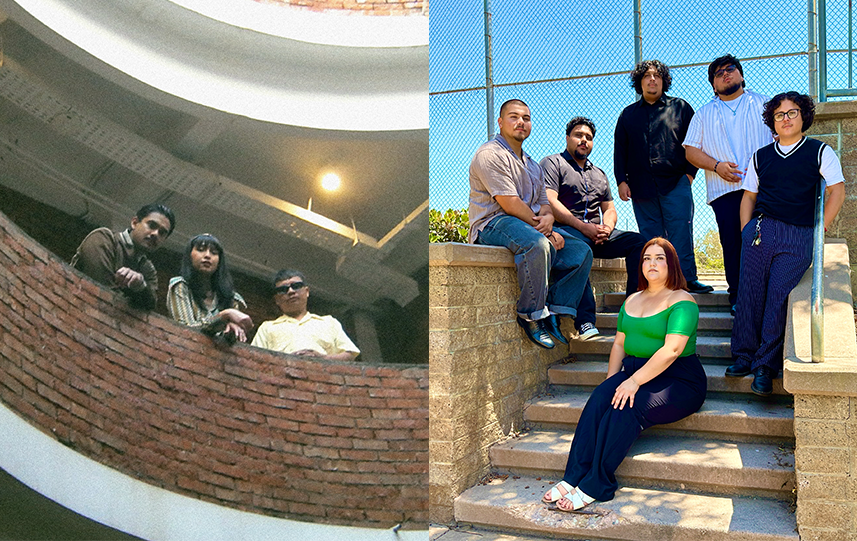
Thee Marloes
When you first hear Thee Marloes, their particular soul sound may seem familiar enough. There are the weighty drums, a crooning guitar, and a beautiful voice singing about unrequited love or the complications of relationships. But then there is something undeniably different about Thee Marloes and their music, something new and distinct. And while you may be acquainted with soul music, you’ve probably never heard it from Surabaya, Indonesia—the place Thee Marloes call home.
With Natassya Sianturi singing and playing keys, Sinatrya (“Raka”) Dharaka on guitar, and Tommy Satwick on drums, how Thee Marloes came to be is pretty straight forward, but the result is anything but. With early influences from American hip-hop, classic soul, rocksteady and lovers rock reggae. Raka found himself driven to write his own songs. Night after night, after getting off work Raka would play and pen his songs with no real idea what he’d do with them. While raw, these early drafts had potential—that much he knew. After crossing paths with Tommy, Raka now had a partner to start fleshing things out with. With similar musical influences and passion, the duo began getting gigs both sitting in with other bands and DJing parties around Indonesia and Southeast Asia. While they didn’t know it then, this time spent cutting their teeth, playing shows, and seeing what was out there, would serve as a crucial foundation for their sound to come.
A significant step was taken in 2019. Raka and Tommy saw a woman perform at a local show that truly captivated them. Her name was Natassya, and her voice had such feeling and range that they knew they had to work with her. Natassya, surrounded by a musical family, grew up in church honing her vocals in the choir. Those chops coupled with the fact that she was inspired by a spectrum of absolute global legends, ranging from The Jackson 5 family to Erykah Badu made her a perfect fit. Raka and Tommy invited her to join a recording session, and it was clear right away that she added a meaningful and talented depth to the music. So now, almost suddenly, with Natassya’s addition, they were a trio that found an authentic voice blending an Indonesian vibe with the universal appeal of soul, jazz, and pop.
The sound Thee Marloes are putting together and recording doesn’t have much of a local scene in Indonesia. “We didn’t have any real bands like that, with that raw soul sound,” Raka explains. “So it made us think we can learn from it and make a new flavor with our sound.” Without much of a road to follow—Thee Marloes paved one for themselves
and it began in their home studio. Acting as a kind of sanctuary, it was a place where creativity wasn’t rushed allowing them to write, play, and jam freely, working out their different ideas and feeling out what works as a group. With little external pressure, their ideas flourished, ultimately giving way to an authentic sound. A sound that eventually caught the ear of Big Crown Records.
“I was, like, shaking when we heard from them,” Natassya remembers of that first contact with Big Crown. “We couldn’t believe it was happening.” Of course, Thee Marloes knew of Big Crown—Lee Fields and El Michels Affair were heavily appreciated by them as they explored and developed their own sound. In hindsight, the connection was almost destined.
The world’s introduction to Thee Marloes’ debut album, titled Perak, started with their first 45 that showcased two distinctly different and unique sides of their sound. The A side “Midnight Hotline” is a punchy dancefloor number built on all funk-slapped drums, vibey piano, and jazzy guitar licks with lyrics that instantly get a hold of you. Contrasting that energy in the classic plug and ballad pairing dynamic, the B side “Beri Cinta Waktu” has all the makings of a beloved B side soul ballad but the lyrics are in Indonesian. Regardless of any language barrier, the sentiment in their music is palpable, helping to make their songs relatable and heartfelt, whatever tongue is native to the listener. The rest of Perak fits perfectly in between those bookends of both energy and language, “I Know” is a mid tempo burner that talks about pulling the veil of lies of a love affair founded on falsehood. “Not Today” is right up there with the grooviest feel good songs you could ever play on a Sunday morning. “Mungkin Saja” brings the tempo back up and brings every to the floor while “True Love” finds Thee Marloes dipping into the soulful side of jazz with a beat ballad that could soundtrack a Tarantino dance scene.
Perak is a journey from the heart of Surabaya into the spirit of the soul sound. It’s about creating a space where none existed, and doing it because you love it. You can tell that Thee Marloes enjoy making their music, from the process of writing and recording, to performing in front of crowds. “We want to share what we live,” Natassya tells us. No
matter what language you speak or culture you come from, Thee Marloes music and energy is so charming that we will all be keeping it close to the turntable for years to come.
Thee Heart Tones
None of her friends or family were surprised when Jazmine Alvarado announced she’d just joined a band as the lead singer. Back in middle school she’d walk around with a ukulele under her arm, she was in a class chorus, and she’d sing every opportunity she got — mostly in Spanish. They weren’t surprised when she told them what kind of music they were playing either — a kind of Chicano soul. Jazmine’s dad had been in a Tejano band when he was younger, and her parents introduced her to ’60s soul singers like Brenton Wood and Barbara Mason. It was, they thought, what Jazmine was destined to do.
The then-unnamed band she’d just joined, with a group of boys, some of whom she’d known from school in Hawthorne, California, would become Thee Heart Tones. Still in their teens when they formed, Thee Heart Tones draw from a deep well of Latin American standards and North American soul ballads but manage to pull something out that sounds fresh and modern.
And how else could the story of a modern band begin than with a DM on Instagram? “One day I got a message from Ricky Cerezo asking if I wanted to write a song for his new band,” Jazmine says. “I knew his drummer Jorge Rodriguez and the other boys from middle school, so they were familiar faces.” Jorge remembered Jazmine, too — the girl who always carried around her ukelele. “They sent me an mp3 of an instrumental they’d written and told me they wanted lyrics,” Jazmine says. “So I wrote some and sent it to them.”
That song ended up being “Don’t Take Me as a Fool,” a downbeat, minor key ballad on which Jazmine’s sultry, pitch-perfect vocals soar, and which is now destined for their debut album. But Jazmine still hadn’t met Ricky in person. That finally happened at their very first rehearsal. “Luckily,” she says, “we got along.” “Once she sang ‘Don’t Take Me As a Fool’, Jorge and I made eye contact,” Ricky says. “We both had goosebumps. We knew this was it; this was exactly what we wanted.”
Thee Heart Tones are Jazmine on vocals, Ricky on keys and organ, Jorge on drums, Jeffrey Romero on bass, Peter Chagolla on lead guitar, and Walter Morales on rhythm guitar. They’re all precociously young: Jorge is the eldest at 21 (“the old man of the band,” Ricky jokes,) Jazmine the youngest at 19, and the others are all 20.
Ricky met Jorge, Peter, Walter, and Jeff at Hawthorne High School. The boys were already in a band, with Peter on vocals, but they were playing heavy metal covers — songs by Black Sabbath, Iron Maiden, and Metallica. Ricky’s dad, who eventually came up with the band’s name, introduced them to mainstream artists like Smokey Robinson and Marvin Gaye, and also opened up a world of rare soul 45s. But it was “Is It Any Wonder” by a contemporary band called Durand Jones & The Indications that would change the course of their lives. “I played th
e song to Jorge and he said, ‘Why don’t we start doing something like this?’,” Ricky says.
After that first rehearsal with Jazmine, Ricky went home to play “Don’t Take Me As a Fool”, recorded as a voice note on his phone, to his dad. “I was hesitant. Dad knew this music better than anyone; he grew up with it. But he grabbed my phone and held it to his ear. His approval meant a lot to me. But he had the same reaction Jorge and I did when we first heard Jazmine sing. ‘This is going to be a hit,’ he told me. ‘You guys have something really special here’.” It was that same recording that caught the ears of Leon Michels and Danny Akalepse of Big Crown Records, who both heard the potential in the group immediately. After they signed to the label, Leon flew out to Los Angeles to record their debut album with Tommy Brenneck at Tommy’s Diamond West studio. They knocked out 14 songs in five days, capturing the charm of teenage soul and mixing it with their seasoned production prowess.
Thee Heart Tones debut album Forever & Ever is a testament to their unmistakable chemistry and talent that are both far beyond their years. Choosing to cover “Sabor A Mi”, a 1950s bolero by Mexican musician Alvaro Carrillo also shows a sophistication in their intention rarely found in kids their age.“It allows us to let our audience know we go back to our roots,” Jazmine says. “Growing up in LA, you get influenced by the city, the artwork, the music,” Ricky says. “Dad didn’t own a lowrider car, but other members of our family did. Impalas. El Caminos. I was influenced by the culture, particularly the Chicano culture. And oldies and soul music played a big part.” The style. The culture. The nod to the past. “That’s what we’re going for. We want to connect young Chicanos with their heritage. And we want to unite people — old and young.”